

Why You Don’t Choose—Even When You Already Know
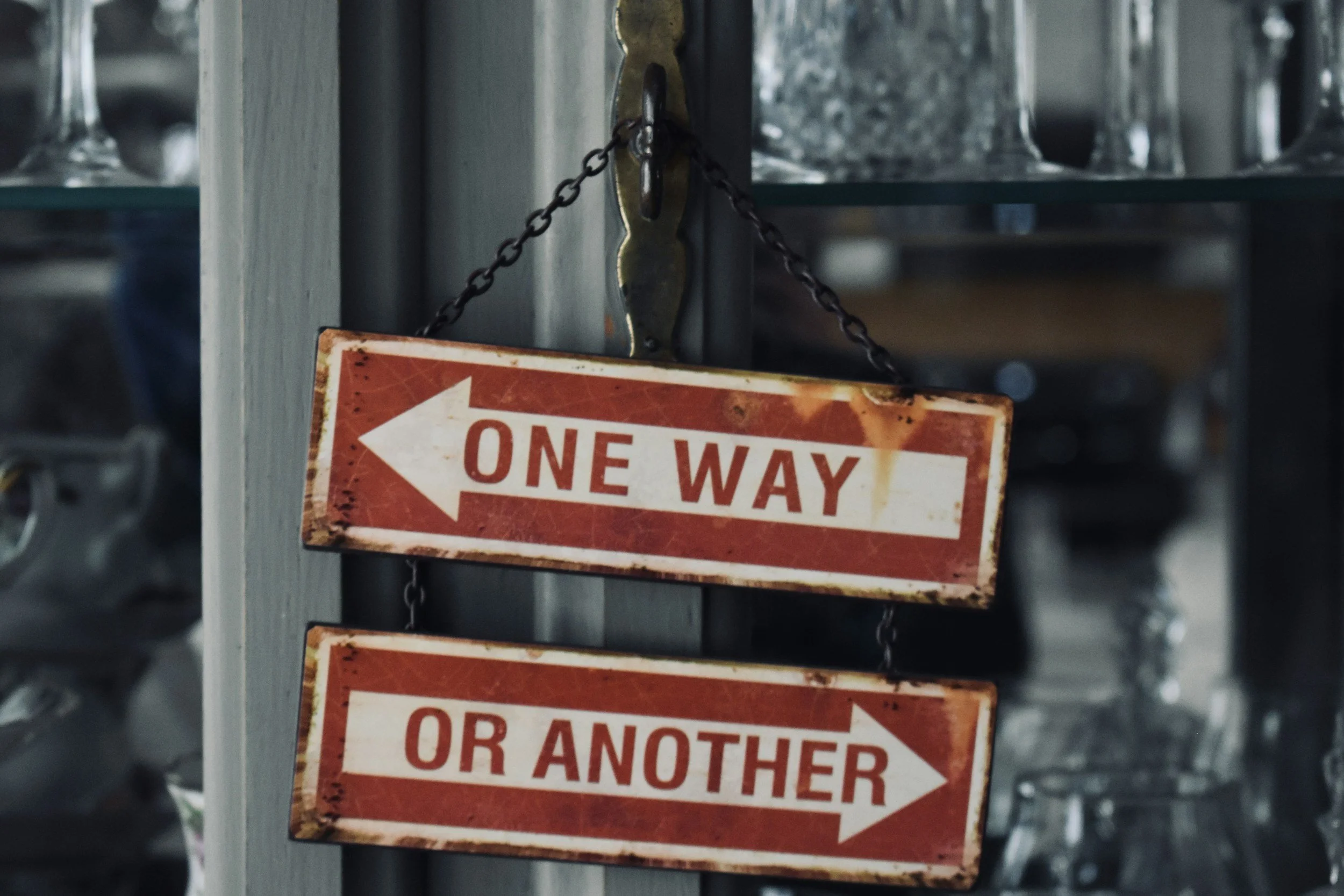
There’s a point in most decisions where the work is no longer about thinking.
It’s about choosing.
The problem is that most people don’t recognize when they’ve crossed that line.
At the beginning, hesitation is valid. You’re gathering information, comparing options, trying to reduce uncertainty. That’s part of the process, and it serves a purpose. But eventually, something changes.
You’ve reviewed the options multiple times, tested different framings, and likely asked for input. At some level—whether you’ve said it out loud or not—you already know where you’re leaning.
And yet, you don’t move.
Instead, you go back into the process. You revisit the same options, adjust the framing, and look for one more perspective. It feels like you’re being thorough, like you’re still working toward clarity. In reality, the nature of the work has shifted.
You’re no longer trying to figure out what to do. You’re avoiding the act of doing it.
This shows up in predictable ways, especially for coaches and builders.
You don’t finalize your niche, even though you’ve been circling the same direction for weeks. You keep adjusting your offer instead of putting it in front of people. You sit on content you’ve already written, convincing yourself it needs one more pass. You describe yourself as “still working through it,” even when the next step is obvious.
From the outside, it looks like progress. From the inside, it feels justified. But functionally, nothing is moving forward.
Behavioral research has a name for this pattern: decision avoidance. When the perceived cost of choosing is high, people delay or defer the decision—even when they already have a clear preference. The friction isn’t coming from a lack of information. It’s coming from what the decision represents.
This is the point where most people misread what’s happening.
They assume the hesitation means something is still unclear, so they continue analyzing. But there’s a stage in the process where additional thinking stops producing clarity and starts protecting you from commitment.
That stage is what I think of as the friction point—the moment right before action, where nothing is technically uncertain, but everything feels heavier than it should.
Part of that weight comes from the fact that every decision closes something.
At a surface level, that’s obvious: choosing one path means not choosing others. But psychologically, the effect is stronger than most people expect. Research on loss aversion shows that people experience losses more intensely than equivalent gains. So even when a decision is directionally correct, your attention is pulled toward what you’re giving up—flexibility, optionality, and the ability to keep multiple paths open.
Remaining undecided preserves those possibilities. It keeps everything available, at least in theory. The moment you choose, that flexibility disappears, and the decision becomes real.
But the deeper layer isn’t just about options. It’s about identity.
Choosing a direction forces definition.
It moves you from someone who is exploring to someone who has decided. And once that shift happens, there’s a level of ownership that follows.
You are now the person who chose this path, who has to execute it, and who has to deal with the outcome.
That’s a different level of exposure.
This is why hesitation tends to peak right before commitment. Not because the decision is unclear, but because it’s about to become real in a way that can’t be reversed as easily.
What makes this difficult to catch is that the behavior doesn’t feel like avoidance. It feels like diligence. You can justify going back through the options. You can explain why you need more time or a slightly better version of the idea. On the surface, it sounds responsible.
But there is a point where that loop stops improving the decision and starts insulating you from it.
You’re no longer refining. You’re maintaining control.
As long as the decision remains open, you don’t have to test it in the real world. You don’t have to risk being wrong. You don’t have to confront whether the direction you’re leaning toward actually works. Keeping the decision alive delays all of that.
Most people assume they’ll act once they feel ready, as if readiness is something that arrives before commitment. In practice, that’s rarely how it works. By the time you’ve reached this stage, you already have enough information to move.
What you’re waiting for isn’t more clarity—it’s for the emotional weight of the decision to disappear.
It doesn’t. Because that weight is part of the decision itself.
At some point, the question has to change. Instead of continuing to ask what the right decision is, it becomes more useful to ask what you are avoiding by not making it. That question cuts through the surface-level explanation and gets to the actual friction.
Once you see that clearly, the pattern is harder to ignore. The revisiting, the refining, the subtle return to thinking right when it’s time to act—it becomes obvious for what it is. Not confusion.
Avoidance at the exact moment where the decision starts to matter.
You’re not stuck because you don’t know what to do. You’re stuck at the point where doing it would close other options and require you to take ownership of the outcome.
